






![Senior varsity track stars, Edward Jones and [name], pass the baton off in the 4x400.](https://lamarlife.org/wp-content/uploads/2026/05/VARSITYTRACK.3.19.26.aw-186-1200x800.jpg)







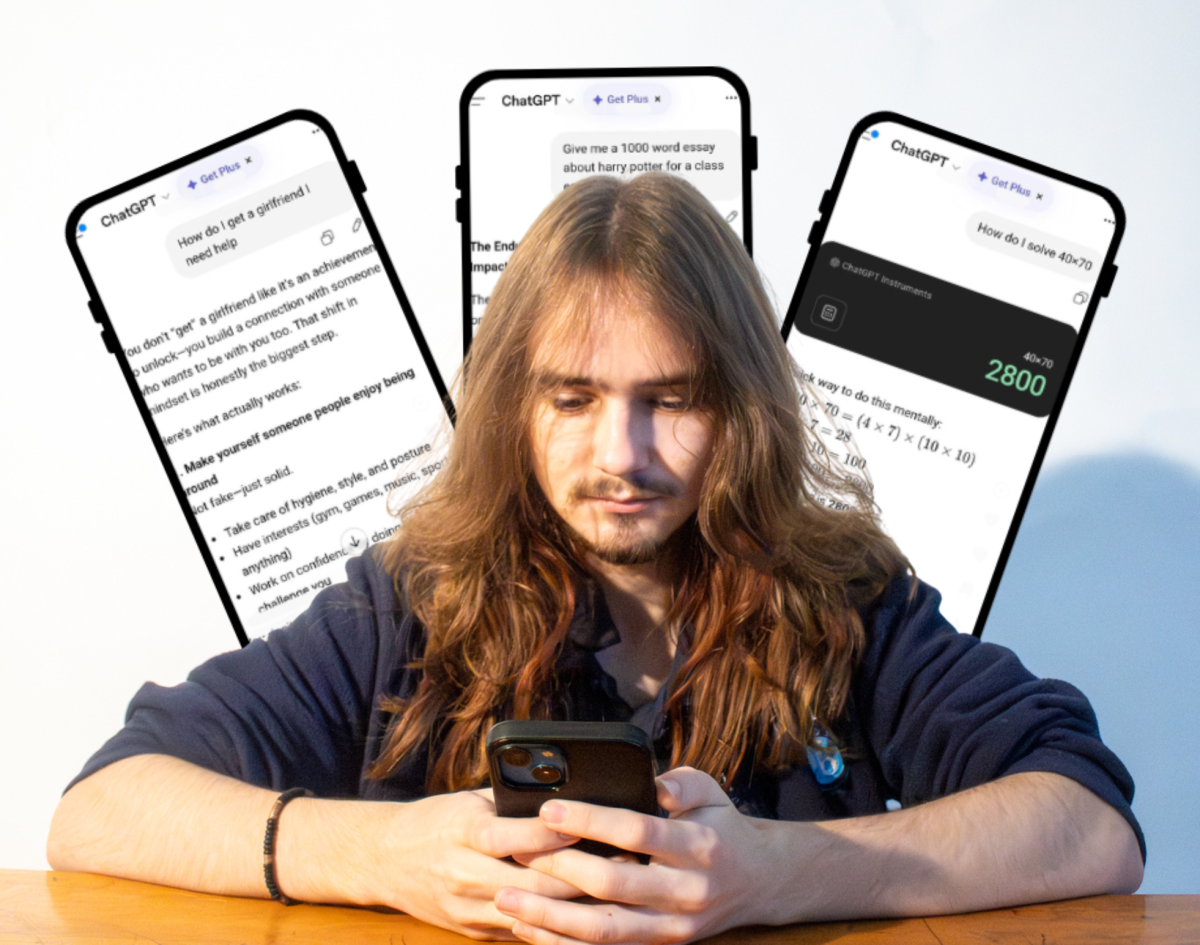


This year, TIME Magazine made a choice that felt almost futuristic by naming artificial intelligence (and the engineers behind it) as Person of the Year. Not a world leader, not a cultural icon, but a piece of technology. The decision confirmed what many of us already feel in our day-to-day lives: AI simply isn’t a distant innovation in the future, but it is now woven into anything and everything we do.
As students, it lives in the tabs on our Chromebooks, in the quick “rephrase this” before submitting an essay, and in the last-minute study guides generated the night before a test. Yet it doesn’t solely stop there. AI is becoming increasingly more than an academic shortcut or productivity tool. Students worldwide are turning to it for advice on friendships, reassurance during stressful nights, help navigating anxiety, and even simple conversation when they feel alone. What started as homework support has quietly evolved into something more personal, something that feels, at most times, eerily human.
While AI becomes more conversational and accessible compared to its original prototype, the line between tool and companion begins to blur. For a generation already shaped by social media and constant connectivity, relying on AI for emotional guidance raises bigger questions.
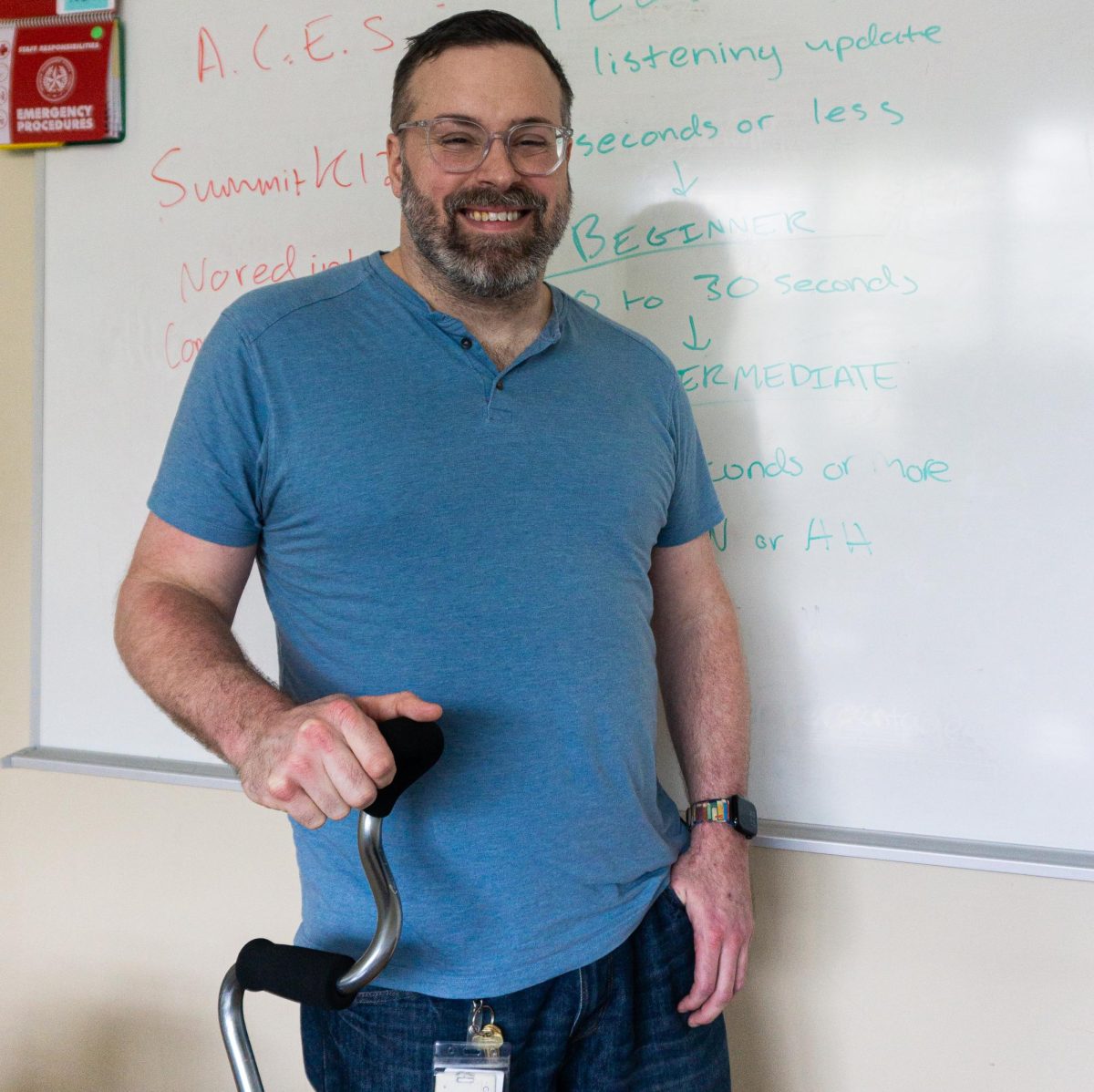
How does this affect the way we cope with stress? Does it strengthen independence, or weaken real-world communication skills? And what does it mean for our development when the voice offering comfort isn’t a person at all? To explore these questions, we turned to IB psychology teacher Mark Krimm, who offered insight as to how growing up with AI may be shaping the way students feel, think, and connect.
For most of us, that pull toward the unknown feels natural, as we’ve grown up alongside rapidly evolving technology. From tablets in elementary school to smartphones at our fingertips, watching each new advancement settle into our daily lives has made AI feel less like a sudden revolution and more like the next, inevitable step. “Adolescence is a time of deep curiosity. There’s something about being a teenager where you want to explore everything. AI almost feels like a crystal ball — you can type in anything, upload a voice note, an image, a random question, and instantly get something back. That sense of ‘Wow, what will it say next?’ is incredibly compelling,” Mr. Krimm states. Although AI satisfies our curiosity while simultaneously providing convenient shortcuts through our assignments, an over-reliance on these platforms may come at a hefty cost.
When we consistently outsource the mental work; we risk slipping into a “use it or lose it” scenario, where critical thinking begins to weaken rather than strengthen. “There’s something in psychology called Cognitive Load Theory. The brain actually wants to calculate, create, synthesize, and problem-solve,” he explains. “ That’s how it builds stronger networks. When a machine takes that load, that part of the brain isn’t working.” For Mr. Krimm, the deeper concern is not the existence of AI itself, but what students may be sacrificing in the process.
In a culture that prioritizes efficiency and outcomes, it becomes easy to focus solely on the finished product, the submitted essay, completed assignment, and polished responses, rather than the mental effort required to produce it. “The process may be more valuable than the product,” he states. The late-night drafting, frustration of not finding the right word, the act of organizing thoughts into something coherent, are not obstacles simply in the way of success; but are the very mechanisms that strengthen cognitive growth. When students allow AI to bypass that struggle entirely, they may also be bypassing the natural development that comes with it. The concern is not whether AI can produce impressive work, but whether students are still engaging in the intellectual workout and process that makes that work meaningful.
Beyond academics, however, the implications become even more complex when AI shifts from being a study tool to something that feels relational. For some students, AI can offer reassurance and judgement with the risk. But Krimm warns that what makes human connection meaningful is precisely what makes it uncomfortable. “The human experience is messy. Real relationships require risk,” he states. “When you put yourself out there face-to-face, there’s vulnerability. Talking to a machine with a few keystrokes isn’t very risky. It’s controlled. It’s predictable.”
Technology will continue to advance, and AI will likely become even more integrated into our classrooms and daily life. And in the end, AI may feel like a crystal ball, offering instant answers and constant reassurance. But the real power can still lie within the human mind, and its ability to wrestle with ideas, take risks, and grow through the process.